Loop Engineering Explained: Loops, Types, and the Difference from Prompt Engineering
Jun 27
/
SARTECH LABS
Loop engineering is a way of designing AI systems so they can work in repeated cycles instead of relying on a single prompt and a single response. In simple terms, it shifts the focus from “what do I ask?” to “how does the system keep improving after each step?”
In programming, a loop is a sequence of instructions that repeats until a condition is met. Loops are useful because they let computers perform repetitive tasks efficiently without writing the same code over and over. Common examples include counting, processing lists, and checking conditions.
There are several common types of loops in programming:- For loop: Used when the number of repetitions is known.
- While loop: Used when repetition continues as long as a condition remains true.
- Do-while loop: Runs at least once before checking the condition.
- Nested loop: A loop inside another loop, often used for grids, tables, and matrix-style problems.
Each type solves a slightly different problem, but all of them share the same core idea: repeat work until the task is complete.
Now you may see a lot of loops using in Claude code. For Example: Ralph Loop in Claude Code. Instead of you prompting Claude repeatedly, Ralph loop makes Claude prompt itself until the job is done.
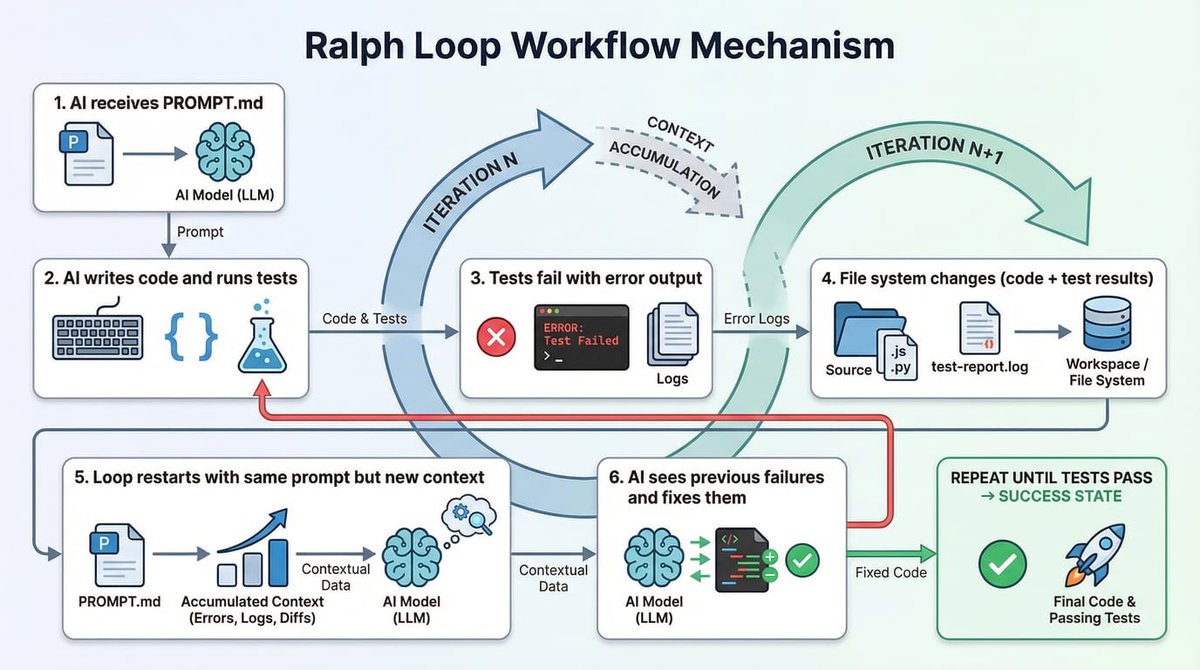
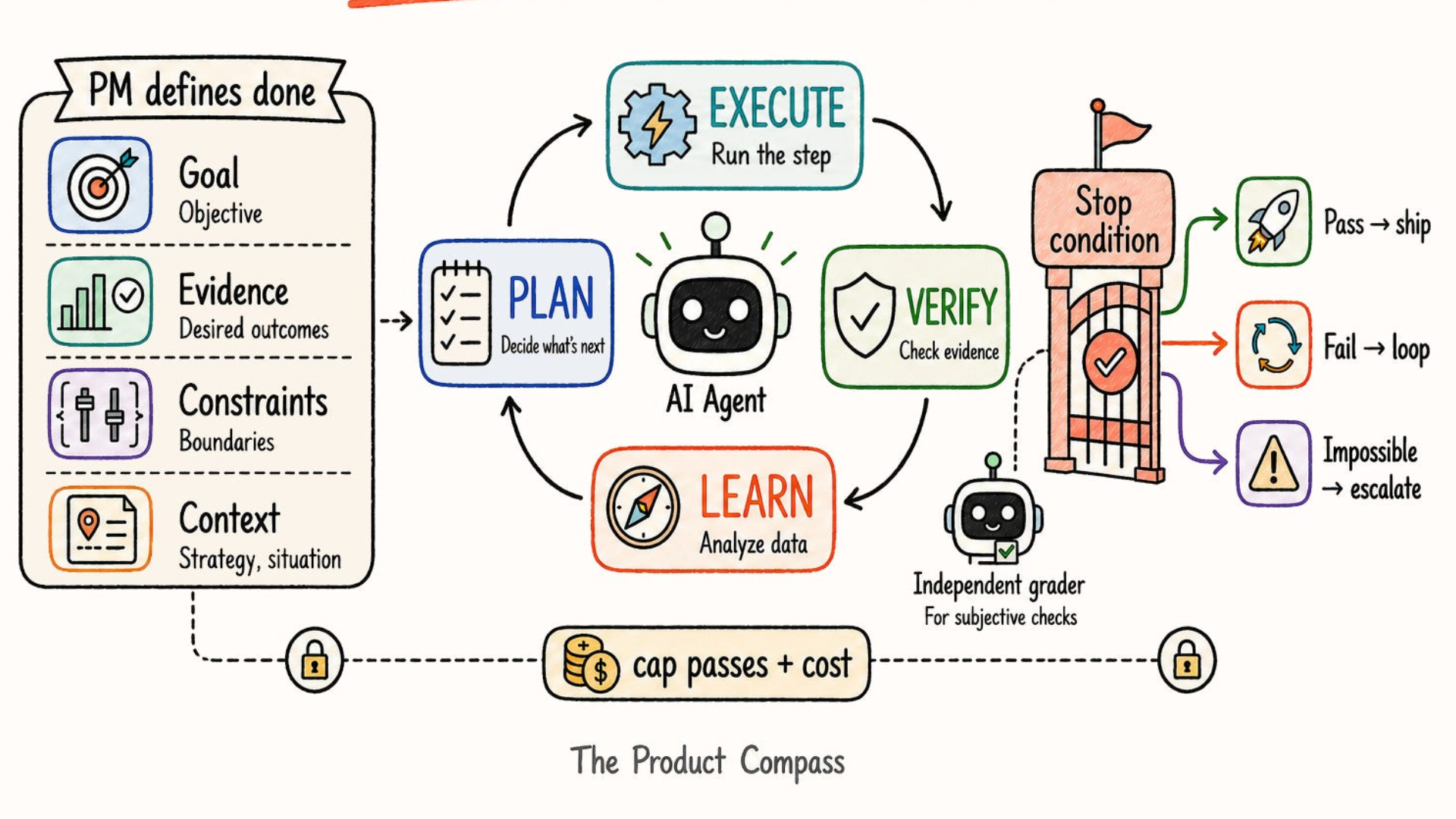
Loop engineering is the practice of building an AI workflow that can repeatedly act, review results, and adjust its behavior. Instead of asking an AI one question and accepting the first answer, you design a system that can evaluate output, apply rules, retry when needed, and improve over time.
This makes it especially useful in situations where quality matters more than speed, such as research, automation, or agent-based systems. The “loop” is not just repetition; it is controlled repetition with feedback.
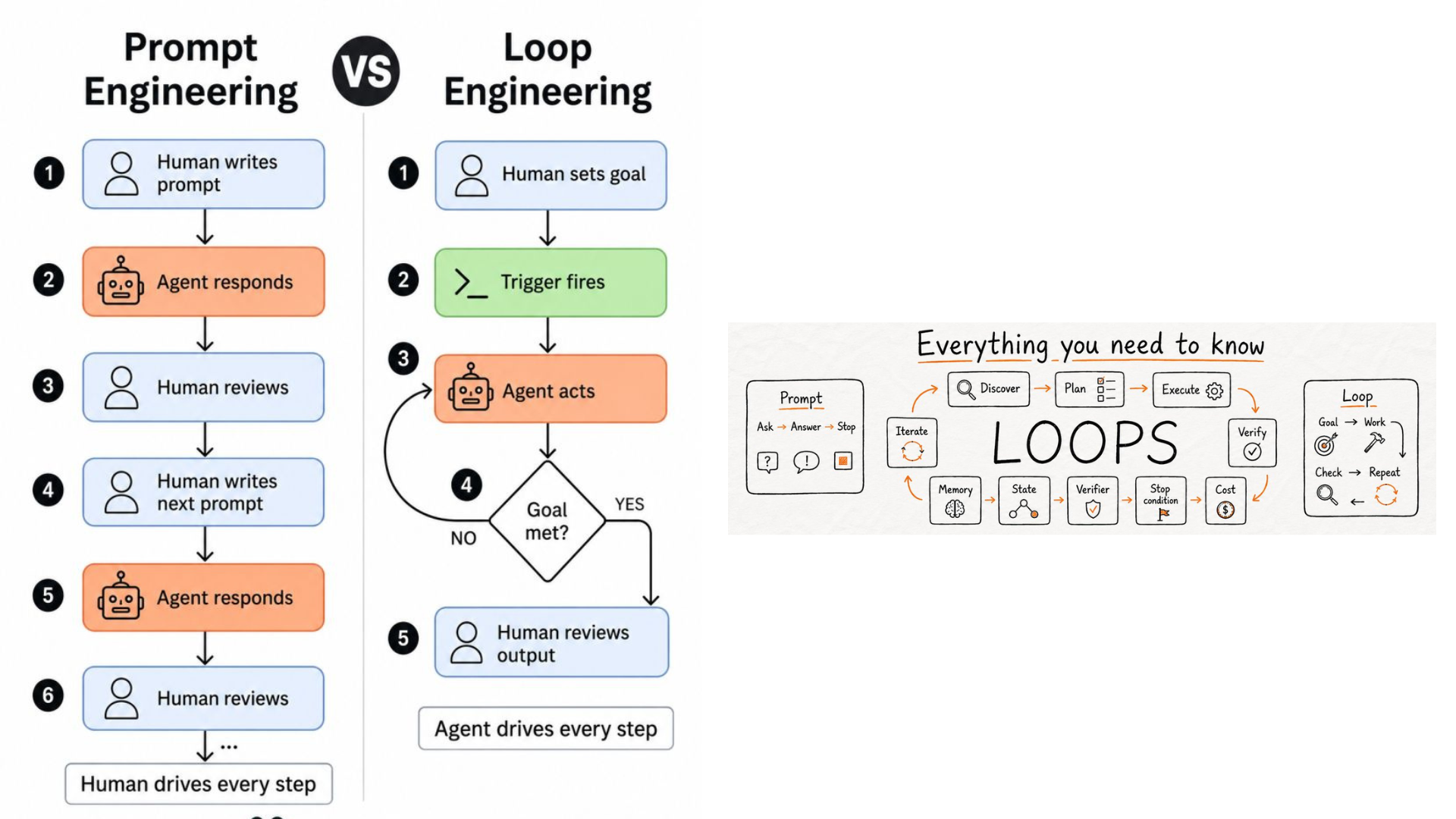
Prompt engineering is about writing better instructions for an AI model so it produces a better answer right away. Loop engineering is about building the process around that model so it can keep refining its work across multiple steps.
Prompt Engineering:
Focuses on the input.Improves the first response.Works best for one-time or simple tasks.
Loop Engineering:
Focuses on the workflow.Improves results through repeated cycles.Works best for complex, multi-step, or adaptive tasks.
A simple example: prompt engineering is asking an AI to write a summary clearly in one attempt. Loop engineering is creating a system where the AI writes a draft, checks it, revises it, and repeats until the result meets your standard.
Loop engineering matters because many real-world AI tasks are not solved well by a single prompt. Some problems need review, correction, and iteration, which makes a loop-based design more dependable.It also helps teams add control and consistency to AI systems. That is why loop engineering is becoming more important in modern AI workflows, especially where automation and reliability are critical.